 The Montessori Method offers children more than just an academic foundation; it nurtures independence, curiosity and a deep respect for diversity. Rooted in worldwide consciousness and cultural understanding, Montessori education creates a unique and inclusive environment where every child is encouraged to explore the world and their place within it.
Multicultural learning is integrated into the classroom experience at Grace Montessori School for primary-level students, considered the most formative and potentially critical stage of development. This approach broadens students’ perspectives, fosters empathy and prepares them to thrive as thoughtful global citizens beyond the classroom.
According to Intercultural Montessori, the seven fundamental characteristics of multicultural education are:
Respect for Diversity
Recognizing and appreciating each student’s unique cultural background and experiences.
At Grace Montessori School, we believe the economic, ethnic, religious and social diversity of our staff members and families is our greatest strength. We actively recruit employees and members of our board of directors who have diverse life experiences, reflect the diversity of our school, and are committed to promoting equality and inclusion. We recognize that, due to their diverse backgrounds, they enrich our organization by providing leadership, positive role models, empathy and support for all the children we serve.
Inclusive Curriculum
Setting an inclusive curriculum that represents the diverse cultural perspectives in the classroom.
Following this Montessori principle, Grace Montessori School encourages families from all economic, ethnic, religious and social backgrounds to be a part of our school. Additionally, we invite our students’ family members to share their cultural traditions, such as celebrations, traditional food dishes and dress.
Equity-Focused Instruction
Addressing systemic inequalities in society and ensuring all students have access to quality education regardless of their background or identity.
At Grace Montessori School, we employ culturally relevant teaching strategies to engage students from various backgrounds in meaningful learning experiences. Additionally, we reserve 30 percent of our enrollment for children from economically disadvantaged families, for whom we provide a scholarship.
Cultural Competency Development
Helping students develop an understanding and appreciation for different cultures through activities such as field trips to museums or cultural events, engaging with guest speakers from diverse backgrounds, or participating in service-learning projects with organizations from various communities.
Grace Montessori School cultivates understanding and respect through real-world, experiential activities, including inviting students’ family members to share their unique cultural experiences by presenting their holiday traditions and celebrations.
Collaborative Learning Environment
Ensuring all students feel comfortable working together, regardless of their cultural backgrounds or identities.
By embedding cooperative learning, respectful communication, and inclusive materials into everyday interactions, Grace Montessori ensures that cultural identity is integrated into the fabric of collaboration and community building. In doing so, every child learns that working with classmates from different backgrounds is a natural and enriching part of their education.
Student Empowerment
Giving students ownership over their learning by allowing them to explore topics related to their own culture as well as different cultures, providing opportunities for them to lead projects related to multiculturalism, and encouraging their participation in decision-making processes within the classroom setting.
We empower students by giving them ownership of their learning, allowing them to choose their own work and progress at a pace that suits them. Through Montessori lessons, students are exposed to a variety of cultures and engage in meaningful discussions that foster a deeper understanding of the world around them. They learn to engage with peers from diverse backgrounds respectfully and are encouraged to share their own cultural traditions through activities such as “show and share” within the classroom environment.
Community Engagement
Connecting classrooms with members from diverse communities outside of school so that students can gain a better understanding of how people from different backgrounds interact with one another on a daily basis.
By weaving community voices and cultural experiences into everyday learning, Grace Montessori School fosters genuine understanding and respect. Students connect with real people, stories and contexts that prepare them for a multicultural world.
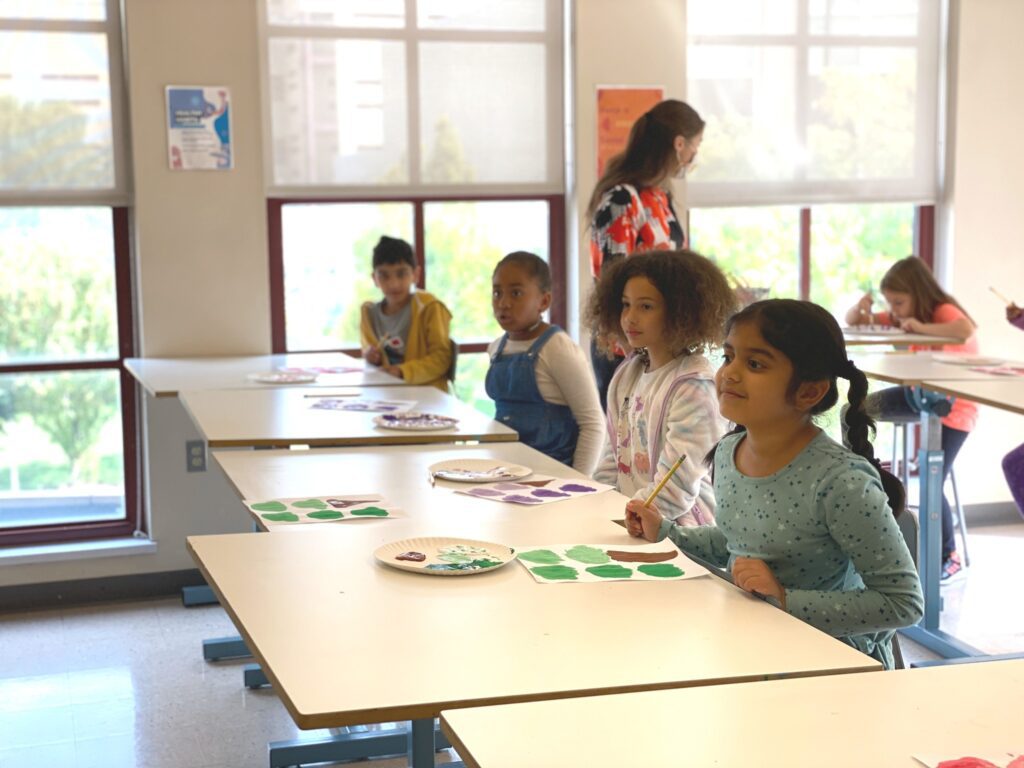
Montessori classrooms are intentionally designed to celebrate diversity while honoring each child’s individuality. Through hands-on cultural lessons and inclusive environments, students develop empathy, an appreciation for different traditions, and pride in their own heritage, while understanding and valuing diverse cultures.
Learn more about Grace Montessori School’s primary level curriculum at gracemontessori.org/primary/.